User Experience Design Strategy Guide: Expert Insights for 2026
Master user experience design strategy for 2026 with expert insights, step by step frameworks, and real world examples to boost conversions and user satisfaction.
In 2026, digital users expect flawless, intuitive experiences with every interaction. A single misstep often means losing their trust — and their business.
This guide dives deep into user experience design strategy, offering proven approaches to help you create seamless, conversion-boosting products.
Whether you are a founder, product lead, or UX professional, you will find actionable insights to align business goals with user needs and drive growth.
You will discover the core principles of UX strategy, the latest trends, research-backed frameworks, and real-world examples from industry experts.
Ready to elevate your digital experience? Let’s get started.
Understanding User Experience Design Strategy in 2026
In 2026, delivering a seamless user experience is no longer optional, it is the expectation. Companies that invest in a robust user experience design strategy set themselves apart, creating products that users love while driving measurable business growth.
Defining User Experience Design Strategy
A user experience design strategy is a holistic, long-term plan aligning business objectives with user needs to create digital products that solve real problems. Over the last decade, this approach has matured, moving beyond surface-level UI tweaks to a process deeply integrated with business goals. Unlike standard UX or UI design, a true strategy ensures every design decision supports both user satisfaction and company objectives.
For example, SaaS startups are boosting annual recurring revenue (ARR) by prioritizing strategic UX planning from the outset. A recent study found that 88% of online consumers are less likely to return after a bad experience. Conducting a UX audit guide step-by-step helps teams identify gaps and build a user experience design strategy that bridges them.
The Pillars of a Modern UX Strategy
Modern user experience design strategy rests on several pillars:
Deep user research and persona development
Data-driven decisions using analytics and real-time feedback
Consistency across web, mobile, and emerging interfaces
Accessibility and inclusivity as non-negotiable standards
Consider a fintech startup that improved accessibility features, resulting in a noticeable engagement boost. Omnichannel consistency and inclusivity are now central to any user experience design strategy, ensuring products are usable for everyone, everywhere.
The Business Value of UX Strategy
Investing in a user experience design strategy delivers tangible business benefits. Companies with strong UX have reported conversion rate increases of up to 400%, according to Forrester. Strategic UX improvements also reduce churn and increase lifetime value (LTV).
Benefit | Example Impact |
|---|---|
Higher conversion | Up to 400% increase (Forrester) |
Reduced onboarding | 60% faster for B2B SaaS platforms |
Lower churn | Increased user retention |
A B2B SaaS platform recently cut onboarding time by 60% through a strategic redesign, showing how a focused user experience design strategy supports both rapid scaling and product-market fit.
Key Challenges for 2026
As user expectations rise, organizations face new challenges in user experience design strategy:
Demand for instant personalization and lightning-fast interfaces
Integrating AI and automation without sacrificing usability
Balancing innovation with simplicity for diverse audiences
Navigating evolving regulations like GDPR and ADA
Mobile optimization remains critical, with 70% of users abandoning poorly optimized mobile experiences. The key is crafting a user experience design strategy that anticipates and adapts to these challenges, ensuring continued growth and user satisfaction.
Step-by-Step UX Design Strategy Framework
Building a robust user experience design strategy in 2026 means thinking beyond surface-level design. It starts with clear goals, moves through research and ideation, and ends with continual improvement. Here’s how to tackle each step, ensuring your product stands out and keeps users coming back.
Step 1: Define Business and User Goals
The first pillar of a user experience design strategy is aligning business objectives with user needs. Start by interviewing stakeholders to clarify what the business wants to achieve. At the same time, map out user pain points and desired outcomes.
Use frameworks like OKRs to set measurable UX goals. Ask, what does success look like for both your company and your users? For example, aligning SaaS product onboarding with user success metrics ensures everyone wins.
Creating this foundation ensures every design decision supports growth and user satisfaction.
Step 2: Conduct Comprehensive User Research
To build an effective user experience design strategy, you must deeply understand your audience. Use qualitative research methods like interviews, usability tests, and ethnographic studies to uncover motivations and frustrations.
Complement this with quantitative tools such as surveys, analytics, and heatmaps. Create detailed personas and journey maps to visualize the user’s path. For instance, a B2B startup might discover hidden friction in their onboarding by conducting remote user interviews.
This research-driven approach keeps your strategy grounded in real user needs, not assumptions.
Step 3: Ideate and Prioritize Solutions
With research in hand, brainstorm solutions as a team. Use design sprints or workshops to generate ideas quickly. Apply prioritization frameworks like MoSCoW or the Impact/Effort matrix to decide what to build first.
A strong user experience design strategy involves cross-functional teams. Bring in product, engineering, and marketing to ensure all perspectives are heard. For example, prioritize features that solve the most pressing user pain points.
This collaborative, methodical process helps you focus on high-impact changes.
Step 4: Prototype and Test
Prototyping turns ideas into tangible experiences. Start with low-fidelity wireframes to test concepts, then progress to high-fidelity prototypes for detailed feedback. Rapid, iterative testing with real users is vital for validating your user experience design strategy.
Leverage remote testing tools to gather insights from a global audience. Remember, 85 percent of UX issues can be identified with just five user tests (Nielsen Norman Group). For a deeper dive into actionable steps, explore the UX design process explained.
This step ensures your ideas work in the real world before investing in full development.
Step 5: Implement and Measure
Collaboration is crucial when moving from design to development. Provide dev-ready assets and clear documentation. Set up analytics to track key success metrics and monitor user behavior after launch.
A data-driven user experience design strategy relies on continuous feedback loops. For example, a SaaS dashboard redesign that leads to a 30 percent drop in support tickets signals the right changes were made.
This approach ensures your UX investments deliver measurable business value.
Step 6: Iterate and Optimize
No user experience design strategy is ever truly finished. Use analytics and user feedback to identify areas for improvement. Run A/B and multivariate tests to see what works best.
Foster a culture of continuous learning and optimization. For instance, an e-commerce platform might increase repeat purchases by regularly enhancing product pages based on user data.
This ongoing process ensures your product evolves alongside user needs and market trends.
Emerging Trends Shaping UX Design Strategy in 2026
Staying ahead in user experience design strategy means tracking the trends shaping digital experiences. As technology and user expectations evolve, five key trends are defining 2026’s approach.
AI-Driven Personalization and Automation
Artificial intelligence is now central to user experience design strategy. AI tailors user journeys with predictive interfaces, making every interaction feel unique. However, over-automation risks losing the human touch, so careful balance is essential.
For example, a streaming service increased retention by leveraging AI-powered recommendations that anticipate user preferences. According to Accenture, 63% of users now expect personalized experiences.
To dive deeper into how AI and emerging technologies are influencing UX, check out the Emerging UX Design Trends for 2026.
Voice, Gesture, and Multimodal Interfaces
User experience design strategy in 2026 is expanding beyond clicks and taps. Voice assistants, gesture controls, and AR/VR interfaces are becoming standard in mainstream products. Designing for seamless transitions between input modes is critical.
A productivity app, for instance, saw a surge in engagement after adding hands-free voice commands. Google reports that 50% of all searches are now voice-based, underscoring the shift toward multimodal interaction.
Teams must craft experiences that anticipate and adapt to how users want to interact, ensuring accessibility and fluidity across devices.
Privacy, Ethics, and Trust by Design
Trust is the currency of digital experiences. User experience design strategy now embeds privacy and ethics into every layer of design. Transparent data practices, clear consent flows, and ethical AI usage are no longer optional.
A fintech app built trust by introducing a clear privacy dashboard, giving users control and visibility over their data. Cisco found that 79% of users will abandon a brand if they feel their data is misused.
Building trust must be a deliberate part of every product’s UX, not just a compliance checkbox.
Hyper-Accessibility and Inclusive Design
In 2026, user experience design strategy means designing for everyone, everywhere. Hyper-accessibility prioritizes neurodiversity, aging populations, and global users. This approach opens new markets and drives loyalty.
A SaaS platform recently grew market share by updating its design for screen readers and color contrast, making the product usable for more people. According to the WHO, 15% of the world’s population lives with a disability.
Inclusive design is not just ethical—it is also a smart business move.
Seamless Integration Across Product and Marketing Touchpoints
Modern user experience design strategy breaks down silos between product and marketing. Users expect a unified journey, from landing page to in-app experience.
A B2B startup doubled demo signups by aligning its landing page messaging with onboarding flows in the product. Salesforce reports that 70% of users expect consistent transitions between channels.
Consistency across touchpoints builds trust, boosts conversion, and strengthens your brand’s reputation.
Expert Insights: What Top UX Leaders Prioritize Now
Staying ahead in user experience design strategy means learning from those at the top. Today’s UX leaders blend data, empathy, and collaboration to create products that stand out. Let’s explore the five key priorities guiding expert teams in 2026.
Strategic Collaboration Across Teams
A successful user experience design strategy thrives on collaboration. Top leaders emphasize cross-functional teamwork, ensuring product, marketing, engineering, and support all contribute to UX outcomes.
By bringing varied perspectives together, teams can spot blind spots early and align on shared goals. For example, a SaaS company accelerated time-to-market by hosting integrated UX workshops. These sessions fostered rapid feedback, unified vision, and kept the user at the center of every decision.
In 2026, fostering collaboration is not optional. It is the backbone of a robust user experience design strategy that adapts quickly and scales efficiently.
Metrics That Matter: Measuring UX Success
Modern user experience design strategy goes beyond vanity metrics. Leaders focus on actionable KPIs like task success rates, time-on-task, churn, and feature adoption.
Setting up analytics dashboards brings real-time insights, helping teams spot friction fast. For instance, a startup founder used cohort analysis to optimize onboarding flows, directly linking UX improvements to product growth.
Here is a quick comparison of essential UX metrics:
Metric | What It Measures | Why It Matters |
|---|---|---|
Task Success | Completion rates | User goal achievement |
Time-on-Task | Efficiency of interactions | Productivity & usability |
Churn Rate | User retention | Business health |
Feature Adoption | Usage of new features | Value delivery |
For a deeper dive, explore Key UX metrics for software, which outlines metrics crucial for proving UX ROI.
Building a UX-Driven Culture
Embedding a user experience design strategy into company culture is a game changer. Leaders gain buy-in from the top down, making user-centric design a shared value, not just a process.
Training and upskilling are key. Teams that prioritize ongoing UX education adapt faster and make smarter decisions. One enterprise SaaS firm doubled retention after launching a company-wide UX training initiative.
A strong culture ensures that everyone, from product managers to developers, champions the user experience design strategy in their daily work.
The Role of Continuous User Feedback
Continuous feedback loops are essential for a resilient user experience design strategy. Experts advocate for in-app surveys, regular interviews, and analytics to keep a pulse on evolving user needs.
This approach enables rapid iterations, reducing the risk of costly missteps. For example, a mobile app doubled its feature adoption rate by integrating ongoing user feedback into its roadmap.
Staying close to users ensures that each change or new feature directly supports the overarching user experience design strategy and business goals.
Future-Proofing Your UX Strategy
Top UX leaders never stop adapting. Future-proofing a user experience design strategy means investing in scalable design systems and frameworks that grow with your product.
Leaders monitor emerging technologies and shifting user behaviors, staying agile and ready for change. One startup future-proofed its operations by building modular design systems, enabling rapid scaling as new markets opened.
By anticipating trends and fostering adaptability, you ensure your user experience design strategy remains relevant, resilient, and ready for tomorrow’s challenges.
Connecting Product and Website UX: A Holistic Approach
Creating a seamless user journey is now essential for any company aiming to build trust and boost conversions. When marketing sites and products feel disconnected, users get confused, which can quickly erode confidence and drive drop-off. In fact, 60% of users abandon a journey if the post-click experience does not match the pre-click message (source: Unbounce). As organizations ramp up investment in unified digital experiences, the projected growth of the UX market highlights the increased focus on a robust user experience design strategy. For more insights, see the UX Market Growth Projections.
The Importance of a Unified User Journey
A unified user journey means every touchpoint, from marketing to product, feels like part of one cohesive story. If users see a promise on your landing page, they expect it to carry through into your app or product. Disconnects can lead to lower trust and lost revenue. A strong user experience design strategy ensures users experience consistency, making it easier for them to understand, engage, and convert. This alignment directly impacts business results, from higher conversion rates to improved customer satisfaction.
Strategies for Consistency Across Product and Marketing
To deliver a consistent experience, teams must align brand voice, visuals, and messaging across all platforms. Here are proven strategies:
Use a shared design system for both website and product.
Coordinate messaging between marketing and product teams.
Regularly audit user flows for inconsistencies.
Ensure onboarding flows match landing page promises.
Embedding these practices in your user experience design strategy helps eliminate friction and builds user trust. SaaS startups have doubled demo signups by syncing landing pages with in-app onboarding, proving the value of this approach.
Case Study: Grauberg’s Holistic UX for SaaS Startups
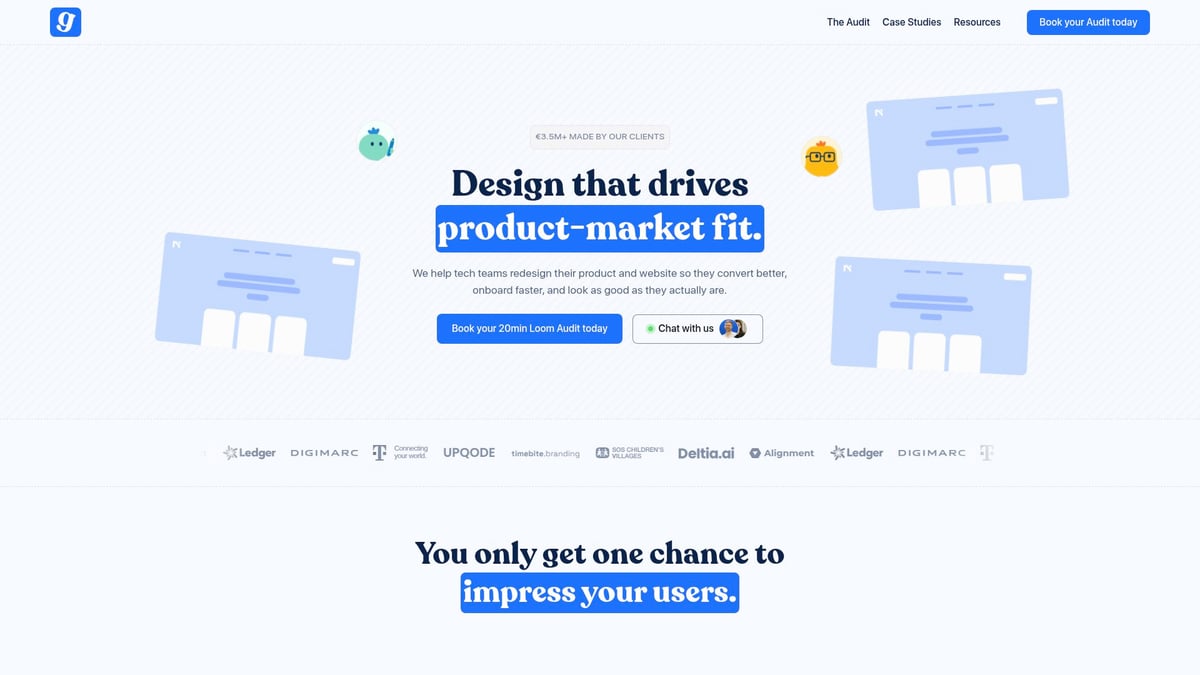
Grauberg partners with B2B SaaS startups to bridge the gap between product and website UX. Their user experience design strategy starts with deep audits across the full journey, followed by actionable recommendations and hands-on design support. The results speak for themselves: clients have increased conversion rates, achieved faster product-market fit, and reported improved user satisfaction. Some startups have even scaled from 0 to €1M ARR and closed enterprise deals thanks to this holistic approach.
Tools and Frameworks for Holistic UX
Implementing a unified user experience design strategy requires the right tools and frameworks:
Design systems like Figma for consistent components.
Collaboration tools such as Notion to document and share UX principles.
Analytics platforms to track multi-touch user journeys.
For example, teams use Figma to align product and website designs, while Notion helps maintain a single source of truth for guidelines. These tools make it easier to keep everyone on the same page and deliver a smooth, unified experience.
UX Strategy Implementation: Pitfalls and Best Practices
Effective user experience design strategy can be the difference between rapid growth and missed opportunities. Even the most well-intentioned teams can encounter pitfalls that undermine their efforts. By understanding common mistakes and following proven best practices, you can ensure your strategy delivers lasting results.
Common UX Strategy Mistakes to Avoid
Many organizations stumble by skipping foundational steps in their user experience design strategy. One major pitfall is bypassing user research or making decisions based on assumptions rather than actual data.
Another frequent mistake is adding unnecessary features, which complicates the interface and confuses users. Ignoring accessibility or compliance requirements can also create barriers, leading to user drop-off and even legal risks.
For example, a startup that rushed its onboarding flow without proper research found users abandoning the product early, highlighting the cost of skipping these essentials.
Skipping or minimizing user research
Overcomplicating the interface with extra features
Neglecting accessibility and compliance
Making decisions without aligning with user needs
A strong user experience design strategy starts by addressing these pitfalls head-on.
Best Practices for Effective UX Strategy Execution
To achieve real impact, focus on simplicity and clarity throughout your user experience design strategy. Regularly validate assumptions with user feedback, and keep documentation accessible to the entire team.
Staying up to date with current and emerging trends is also crucial. Resources like Top UX/UI design trends 2024 can inform your approach, helping you avoid outdated patterns and align with user expectations.
Best Practices Table:
Practice | Benefit |
|---|---|
Prioritize simplicity | Reduces user confusion |
Validate with feedback | Ensures user alignment |
Document and share learnings | Builds organizational memory |
By applying these best practices, one SaaS company dramatically reduced churn simply by streamlining dashboard navigation.
Scaling UX Strategy in Growing Organizations
As organizations expand, maintaining a consistent user experience design strategy becomes more complex. Building scalable design systems and processes is essential for supporting rapid growth without sacrificing quality.
Empower teams with clear UX guidelines and ongoing training. For example, a tech scaleup maintained high UX standards during aggressive growth by investing in comprehensive documentation and regular team workshops.
Establish and maintain a design system
Offer regular UX training sessions
Encourage cross-team knowledge sharing
Scaling your user experience design strategy ensures that growth does not dilute the user experience.
Maintaining Agility in UX Strategy
The digital landscape is ever-changing, so agility is critical for a successful user experience design strategy. Adopting agile methodologies enables teams to continuously improve and adapt to shifting user needs.
Balance a long-term vision with short-term experiments, using data from rapid iterations to guide future enhancements. For instance, a B2B startup improved conversion rates by frequently testing and refining its pricing page.
Use agile sprints for ongoing updates
Leverage data to inform changes
Encourage experimentation and learning
An agile user experience design strategy positions your product to thrive amid constant change.
If you’re serious about boosting your product’s conversion rate and want to bridge the gap between your website and your actual user experience, now’s the perfect time to act. We’ve covered how a unified journey—from landing page to in-app action—can lift trust, drive growth, and help you reach product market fit faster. If you want to see where your own user journey could be smoother or more seamless, why not let us take a look together? You can Book a free Product Website Audit and get tangible, expert insights tailored to your startup’s needs.