The Essential UX Designer Role Guide for 2026
Discover the essential UX designer role for 2026. Explore key skills, tools, and strategies to thrive in the evolving UX landscape and advance your career.
As digital experiences rapidly evolve, the ux designer role in 2026 stands at the center of innovation and complexity. In this guide, you’ll discover the essential skills, key responsibilities, and industry expectations shaping tomorrow’s design leaders.
Get ready to explore how artificial intelligence, immersive tech, and data-driven personalization are transforming the field. We’ll break down must-have tools, collaborative workflows, and actionable strategies to help you thrive.
Ready to future-proof your career and achieve real impact? Dive in and unlock what it takes to become indispensable as a ux designer role in 2026.
The Evolving UX Landscape in 2026
The ux designer role is evolving rapidly, mirroring the pace of digital innovation. In 2026, designers face a landscape shaped by emerging technologies, shifting user needs, and expanding business demands. Understanding these changes is crucial for anyone aiming to thrive in this dynamic field.
Key Industry Trends and Drivers
What are the key forces transforming the ux designer role in 2026? Several major trends are setting the pace:
Trend | Impact on UX Designer Role |
|---|---|
AI and Automation | Streamlines processes, enables predictive design |
Immersive Tech (AR/VR/XR) | Expands interactive possibilities |
Accessibility & Inclusion | Prioritizes universal, user-centric design |
Personalization & Real-Time | Demands adaptive, data-driven experiences |
B2B SaaS, Healthcare, IoT | Broadens industry reach and complexity |
AI-powered tools are reinventing the way designers approach research and prototyping. The rise of AR, VR, and XR is pushing the boundaries of what’s possible in digital interaction. Accessibility and inclusivity are now non-negotiable, with more organizations investing in these areas. Data-driven personalization allows products to adapt instantly to user needs.
According to a 2025 NN/g survey, 72% of organizations planned to ramp up spending on AI-driven UX tools. To dive deeper into these changes, check out the Future of UX Design for a comprehensive look at what's next.
The Expanding Scope of UX Designer Roles
The modern ux designer role now goes far beyond crafting interfaces. In 2026, designers are responsible for optimizing the entire user journey, from first touchpoint to long-term engagement.
Designers are increasingly integrated into product strategy, helping align UX with core business objectives. This shift means more collaboration with research, engineering, and marketing teams. For example, a SaaS startup recently reported a 30% boost in onboarding success after UX took the lead in journey mapping and design optimization.
This holistic approach makes the ux designer role pivotal to both product and business outcomes, demanding a broader skill set and strategic mindset.
Challenges Facing UX Designers in 2026
With opportunity comes new challenges for the ux designer role. Designers must balance automation with a human-centered ethos, ensuring that technology enhances rather than replaces genuine user empathy.
Common challenges include:
Navigating ethical issues in AI and data privacy
Managing distributed design teams across time zones
Adapting to constantly evolving tools and frameworks
Staying ahead means continuously updating your toolkit and ethical standards, so the ux designer role remains both innovative and responsible.
Opportunities for Career Growth
The changing landscape offers exciting opportunities for anyone in the ux designer role. There’s a surge in leadership positions like UX Strategist and Head of Product Experience. New specializations—such as voice UX, spatial design, and accessibility—are opening up fresh career paths.
Demand for UX skills is rising in non-traditional sectors, including fintech, healthcare, and IoT. As a result, the ux designer role is more versatile and future-proof than ever before.
Future-Proofing Your UX Career
How can you ensure your ux designer role remains relevant in 2026? Continuous learning is key. Engage in UX communities, attend conferences, and pursue certifications to stay current.
Mentorship and online courses are essential for upskilling. According to a 2025 UXPA survey, 85% of professionals said ongoing education was critical to career longevity. Staying adaptable and curious will help you navigate whatever the future brings to the ux designer role.
Core Skills & Competencies for UX Designers in 2026
What does it take to excel in the ux designer role in 2026? The answer goes beyond visual flair. Today’s designers need a blend of foundational methods, technical know-how, business thinking, and adaptability to thrive. Let’s break down the must-have skills shaping the future of UX.
Foundational UX Skills
At the core of every successful ux designer role are timeless skills. User research, both qualitative and quantitative, forms the backbone of understanding real needs. Designers use interviews, surveys, and analytics to map out user journeys and pain points.
Wireframing, prototyping, and interaction design help bring ideas to life. Tools like Figma and Sketch enable rapid iterations and stakeholder feedback. Usability testing ensures solutions are intuitive, while information architecture and content strategy organize content for clarity.
If you’re looking to start or deepen your experience, Becoming a UX Designer offers a practical roadmap for mastering these essentials. Foundational skills will always anchor the ux designer role, even as the field evolves.
User research (interviews, analytics)
Wireframing and prototyping
Usability testing and iteration
Information architecture
Content strategy
Emerging Technical Skills
The 2026 ux designer role demands comfort with new technologies. Designing for AI-driven interfaces and chatbots is now standard in many industries. Proficiency with AR/VR prototyping tools, such as Figma AR and Adobe Aero, is quickly becoming a differentiator.
Working with low-code and no-code platforms lets designers test and launch ideas faster. Data visualization and analytics interpretation help turn complex insights into actionable design decisions.
Keeping pace with these technical shifts ensures the ux designer role remains relevant in a rapidly changing landscape.
AI-driven interface design
AR/VR prototyping tools
Low-code/no-code platforms
Data visualization
Essential Soft Skills
Soft skills remain a defining quality of the modern ux designer role. Empathy and user advocacy keep the user at the center of every decision. Designers must communicate and tell compelling stories to sell their ideas and gather feedback.
Collaboration is crucial, especially with remote and cross-functional teams. Leadership and stakeholder management skills help guide projects and align diverse perspectives.
Building these interpersonal strengths makes the ux designer role more impactful and valued within any organization.
Empathy and advocacy
Communication and storytelling
Collaboration across teams
Leadership and stakeholder management
Business and Strategic Acumen
The ux designer role has expanded to include strategic and business-focused thinking. Aligning UX with business KPIs and product-market fit is essential for driving measurable outcomes. Designers now need to measure and report on ROI, showing how their work directly impacts the bottom line.
For example, a ux designer role that led a product redesign often sees conversion rates rise, proving the tangible value of thoughtful UX. Understanding business goals positions designers as partners, not just executors.
Aligning UX with KPIs
Measuring and reporting ROI
Driving conversion rate increases
UX Skill Area | Core Focus | Business Impact |
|---|---|---|
Research & Testing | Understanding users | Improved product-market fit |
Technical Skills | Emerging tech | Faster, more innovative design |
Soft Skills | Teamwork, empathy | Stronger collaboration |
Strategic Acumen | KPIs, ROI | Measurable business results |
Continuous Learning & Adaptability
The only constant in the ux designer role is change. Staying updated with the latest design systems and frameworks is fundamental. Participating in mentorship, bootcamps, and online courses helps designers refine their skills and stay ahead.
According to LinkedIn Learning’s 2025 report, UX design courses are among the top five most completed professional programs. This highlights the value of continuous upskilling for anyone in the ux designer role.
Engage in mentorship (giving and receiving)
Attend bootcamps and conferences
Complete online courses and certifications
Adaptability and a learning mindset ensure a long, successful career in UX, no matter how the industry shifts.
Essential Tools & Technologies for UX Designers
Staying ahead in the ux designer role means mastering a growing ecosystem of tools and technologies. In 2026, UX professionals rely on platforms that support creativity, efficiency, and seamless collaboration. Let’s explore the must-have solutions shaping the future of UX.
Design & Prototyping Platforms
For the modern ux designer role, intuitive design and prototyping platforms are core essentials. Figma, Sketch, and Adobe XD continue to lead, offering powerful features and integrations for 2026. These tools now support real-time collaboration in the cloud, making teamwork smooth, even for distributed teams.
Figma’s AI-powered design assistant, for example, is seeing high adoption rates. It helps automate repetitive design tasks and offers smart suggestions, streamlining workflows. New plugins and integrations allow for advanced prototyping, including AR and VR interface design.
When comparing these platforms, consider:
Platform | Key Feature (2026) | Collaboration |
|---|---|---|
Figma | AI assistant, AR prototyping | Real-time |
Sketch | Improved vector tools | Cloud sharing |
Adobe XD | Voice & VR integration | Cross-device |
Choosing the right design tool is vital for every ux designer role.
User Research & Testing Tools
User research is at the heart of the ux designer role. In 2026, platforms like UserTesting and Maze enable remote usability testing at scale. These tools offer advanced analytics with heatmaps, session replays, and even biometric feedback, so designers can deeply understand user behaviors.
Hotjar and FullStory provide detailed user journeys and pinpoint friction points. AI-driven insights help synthesize feedback quickly, speeding up the iteration cycle. With these technologies, the ux designer role can focus on evidence-based improvements that drive real impact.
Modern research stacks support both qualitative and quantitative analysis, making it easier to validate design decisions and prioritize features in competitive markets.
Collaboration & Handoff Solutions
Seamless collaboration is key for any ux designer role working with product teams. Integrated platforms like Zeplin and Avocode connect designers and developers, reducing miscommunication and accelerating project timelines.
Version control and thorough documentation are best practices in 2026. Automated handoff tools now allow for painless asset delivery and instant updates when designs change. In fact, 60% of teams use these solutions to minimize friction between design and development.
By adopting these platforms, the ux designer role ensures design fidelity and a smooth transition from concept to code. Clear process documentation keeps everyone aligned, especially when teams span multiple locations.
Accessibility & Inclusivity Toolkits
Accessibility is non-negotiable for the ux designer role in 2026. Automated checkers such as axe, Stark, and Wave help identify and resolve issues early in the design process. Inclusive design libraries provide ready-to-use patterns that work for all users, regardless of ability.
A case study from the fintech sector highlights the impact: accessibility improvements led to a 20% increase in user engagement. These results show that prioritizing inclusivity not only meets compliance standards but also drives business goals.
Building accessible products is integral to the ux designer role, helping create digital experiences that empower everyone.
Workflow Automation & AI Integration
AI is rapidly transforming the ux designer role. AI-powered design assistants can generate layouts, populate content, and offer intelligent suggestions, freeing up time for creative problem-solving. Teams automating these routine tasks report productivity boosts of up to 40%.
For more on how automation is shaping the field, see AI's Role in UX Design. Embracing automation allows designers to focus on strategy, research, and innovation.
In 2026, integrating AI into daily workflows is a key differentiator for any successful ux designer role.
The UX Designer’s Workflow: From Research to Launch
The ux designer role in 2026 covers far more than crafting beautiful screens. Today’s UX professionals guide digital products from initial ideas to real-world impact, championing both user needs and business goals. Mastering this workflow is essential for anyone aiming to thrive in the evolving UX landscape.
Let’s break down each stage of the modern UX designer role, illustrating how each step drives results and prepares you for the demands of tomorrow.
Step 1: Discovery & Research
Every successful ux designer role starts with a deep dive into user and business needs. Discovery involves meeting stakeholders, aligning on objectives, and understanding the product’s context.
Conduct stakeholder interviews to uncover business priorities.
Develop user personas that represent key audience segments.
Map user journeys to identify pain points and opportunities.
Analyze competitors and market trends for differentiation.
For example, a SaaS team might uncover through research that users struggle during onboarding, leading to a prioritized redesign. To explore this process in even more depth, check out the UX Design Process Explained.
Step 2: Ideation & Concepting
Once you’ve built a foundation, the ux designer role shifts to ideation. This is where creative problem-solving takes center stage.
Run design sprints or brainstorming workshops to generate ideas.
Sketch low-fidelity wireframes to quickly visualize concepts.
Prototype different flows and features for early feedback.
Collaborate with researchers, engineers, and marketers for well-rounded solutions.
Fast, iterative ideation helps teams zero in on solutions that balance user needs with technical constraints, setting the stage for effective design.
Step 3: Design & Prototyping
In this phase, the ux designer role focuses on bringing ideas to life through detailed design and interactive prototypes.
Create wireframes and mockups for key screens and flows.
Build interactive prototypes using tools like Figma or Adobe XD.
Apply design systems to ensure consistency and scalability.
Gather stakeholder feedback in iterative cycles to refine designs.
Strong prototyping enables teams to visualize the end experience early, reducing costly changes down the road and ensuring everyone is aligned.
Step 4: User Testing & Validation
No ux designer role is complete without rigorous user testing. This step is all about validating design decisions and uncovering usability issues.
Conduct usability tests, both remotely and in-person.
Use moderated or unmoderated sessions for different types of feedback.
Synthesize findings into actionable insights for the team.
Run A/B tests to compare different design solutions.
For instance, a fintech app might discover through user testing that a new feature confuses first-time users, prompting a quick redesign before launch.
Step 5: Handoff & Implementation
Here, the ux designer role bridges the gap between design and development, ensuring ideas become reality without losing quality.
Prepare dev-ready assets and clear documentation.
Use tools like Zeplin or Avocode for seamless handoff.
Maintain close communication with engineers to resolve issues.
Ensure the final product matches design intent.
Efficient handoff reduces friction, speeds up development, and minimizes costly revisions, making this step critical for modern UX teams.
Step 6: Post-Launch Analysis & Iteration
The ux designer role does not end at launch. Continuous improvement is key to long-term success.
Monitor analytics and user KPIs to measure impact.
Collect feedback from users and support channels.
Plan iterative updates and roadmap enhancements based on real data.
For example, tracking user drop-off points post-launch might reveal new opportunities for optimization, keeping your product competitive and user-focused.
Collaboration & Career Success in Modern UX Teams
Collaboration is at the heart of every successful ux designer role in 2026. As teams become more dynamic and distributed, designers must master new ways of working together, building their personal brands, and demonstrating impact in a changing landscape. Let’s explore what drives modern UX team success and how you can elevate your career.
Cross-Functional Teamwork
The modern ux designer role thrives on cross-functional teamwork. Designers regularly collaborate with product managers, engineers, marketers, and researchers to deliver exceptional user experiences. Clear documentation and open communication are essential for aligning on goals and ensuring everyone is on the same page.
Many teams now use shared design systems to streamline workflows and maintain consistency. In fact, high-performing teams often credit their success to these systems. To get a deeper understanding of these collaborative demands, explore the Job of a UX Designer, which breaks down day-to-day responsibilities and teamwork scenarios.
Working across disciplines not only improves product outcomes but also helps designers develop critical business and leadership skills, preparing them for bigger challenges ahead.
Remote & Distributed Work Best Practices
Remote work is no longer a novelty for the ux designer role. By 2026, 67% of UX teams are either partially or fully remote. This shift demands new best practices for asynchronous collaboration, including regular rituals like daily standups and weekly retrospectives.
Managing time zones and feedback cycles can be tricky, but modern collaboration tools help bridge the gap. Teams rely on cloud-based platforms to keep everyone aligned, regardless of location. Clear, concise documentation ensures that ideas and feedback do not get lost in translation.
The ability to adapt to distributed work environments is now a core skill for designers, opening doors to global opportunities and more flexible career paths.
Building a Personal UX Brand
Standing out in a competitive market is a must for anyone in the ux designer role. Your portfolio is your first impression, so it needs to reflect both your technical skills and your ability to solve real business problems.
Case studies and testimonials provide social proof, showing potential employers or clients the impact of your work. Beyond your portfolio, contributing to the UX community—whether through blog posts, talks, or social media—can help establish your authority and credibility.
A strong personal brand positions you as a go-to expert and increases your chances of landing leadership roles or exciting projects.
Mentorship, Networking, and Community
No ux designer role exists in a vacuum. Mentorship and networking are vital for growth, whether you are just starting out or seeking your next big challenge.
Active participation in UX communities, conferences, and online forums opens doors to new insights and connections. Organizations like UXPA and the Interaction Design Foundation offer valuable resources and events. Local meetups can spark collaborations and friendships that last throughout your career.
Mentoring others not only reinforces your own knowledge but also supports the next generation of designers, enriching the entire field.
Measuring and Communicating Impact
Demonstrating the value of your ux designer role requires more than just great design. You need to measure and communicate your impact through clear metrics like conversion rates, retention, and Net Promoter Score (NPS).
When you present results to stakeholders and executives, use real data and case studies. For example, a B2B SaaS startup recently attributed 25% revenue growth directly to UX improvements. These tangible outcomes prove the strategic value of UX and help secure future investments.
Quantifying your impact also builds your credibility and supports your case for promotions or new opportunities.
Navigating Career Paths & Specializations
The ux designer role in 2026 is more diverse than ever. You can specialize as a UX researcher, interaction designer, strategist, or accessibility specialist. Leadership and management paths are opening up as organizations recognize the importance of UX at every level.
Salary trends remain strong, and job growth is projected to continue as more industries embrace user-centered design. Upskilling in new tools and emerging fields like voice UX or inclusive design keeps your skillset future-proof and in demand.
By proactively shaping your career path, you can unlock new opportunities and become an indispensable member of any modern UX team.
The UX Designer’s Role in Driving Business Value
The modern ux designer role is pivotal in shaping business outcomes. In 2026, organizations recognize that exceptional user experiences are not just a competitive edge, but a fundamental driver of growth, retention, and innovation. Let’s explore how the ux designer role directly impacts business value, metrics, and leadership.
UX as a Strategic Business Asset
The ux designer role now sits at the intersection of business strategy and user needs. UX is no longer limited to interface polish. Instead, it drives product-market fit, customer loyalty, and revenue growth. According to Forrester’s 2025 report, companies with mature UX practices outperform the S&P 500 by 228%. This impact is amplified by a focus on accessibility and inclusive design, which broadens market reach and fosters brand trust. To see how accessibility trends are transforming business, explore Inclusive Design in 2026. The ux designer role ensures that digital products resonate with diverse audiences and adapt quickly to shifting market demands.
Aligning UX with Product & Marketing
A successful ux designer role bridges the gap between product functionality and brand storytelling. Consistency across web, mobile, and product interfaces deepens user trust and reinforces a unified brand message. Collaboration with marketing teams ensures that user journeys align with campaign goals and customer expectations. For example, a SaaS startup unified its UX and marketing strategy, resulting in a measurable boost in conversion rates and reduced churn. The ux designer role is essential in orchestrating these seamless, cross-channel experiences that drive both acquisition and long-term loyalty.
UX Metrics & ROI
Measuring the value of the ux designer role is critical for business buy-in. Teams use KPIs such as task success, time on task, and customer satisfaction (CSAT) to demonstrate impact. Quantifying ROI is straightforward when UX improvements lead to tangible results, like a 50% reduction in support costs after a redesign (NN/g, 2025). Presenting these metrics to stakeholders highlights the strategic importance of UX investments.
Metric | Business Outcome |
|---|---|
Task Success Rate | Higher user satisfaction |
Time on Task | Improved efficiency |
CSAT/NPS | Increased retention |
Support Tickets | Lower operational costs |
The ux designer role must continuously track and communicate these outcomes for sustained organizational support.
Overcoming Common Business Challenges
The ux designer role often faces skepticism regarding resource allocation or ROI. Addressing these challenges requires clear communication, data-driven advocacy, and a focus on ethical design. As AI and data privacy concerns grow, transparency becomes essential. Learn more about the ethical dimension of UX in Ethical UX and Data Privacy, which explores responsible data use in design. Building trust with stakeholders hinges on showing how the ux designer role reduces risk, enhances compliance, and delivers sustainable value.
How a Strategic Design Partner Accelerates UX Outcomes
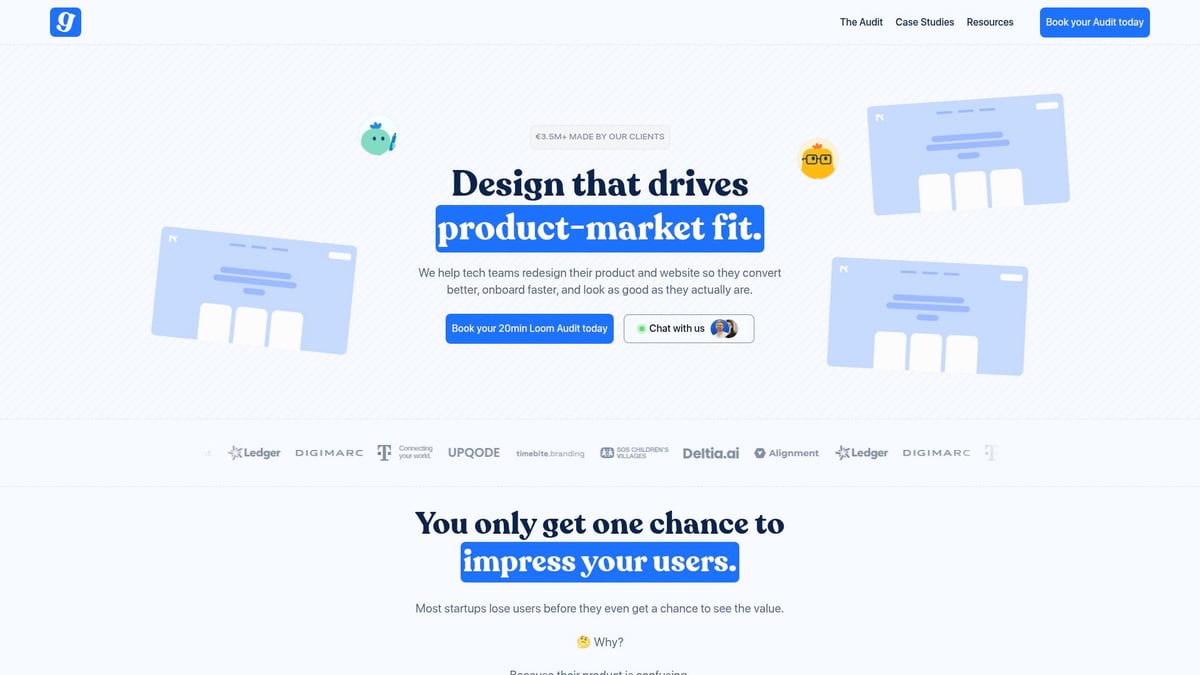
Aligning product and website design is crucial for a holistic user journey. Expert design consultancies, like Grauberg, provide end-to-end support, actionable audits, and proven impact for SaaS startups. The ux designer role, when partnered with strategic design experts, can drive faster launches, higher conversion rates, and improved product-market fit. Real-world results show startups leveraging design partners achieve revenue growth and competitive advantage by integrating UX best practices from day one.
The Future of UX Leadership
Looking ahead, the ux designer role is evolving into executive leadership positions such as Chief Experience Officer. These leaders shape organizational culture around user-centricity, driving innovation and loyalty. Companies that embrace UX leadership see measurable gains in customer satisfaction and market differentiation. The ux designer role is now essential not just for product teams, but for shaping business strategy at the highest level.
If you’re serious about taking your UX skills to the next level in 2026 and want your product and website to work together seamlessly for your users, why not get a fresh perspective? At Grauberg, we’ve helped countless B2B startups connect the dots between their landing page and product, so every step of the user journey feels effortless. You deserve to see how your own experience measures up—and what small tweaks could make a big impact on your growth and conversions. Ready for some actionable insights? Book a free Product Website Audit and let’s make your UX future ready.